


Somerset Skin Centre
255 Kirts Blvd, Suite 100
Troy, MI 48084
Phone: (248) 244-8448
Fax: (248) 244-8766
Monday - Friday 8:00 am - 5:00 pm. Evening appointments available Wednesdays and Thursdays
Saturday 8:00 am - 1:00 pm
Mohs Micrographic Surgery available on Mondays, Tuesdays, and Saturdays.
Psoriasis Treatment Center
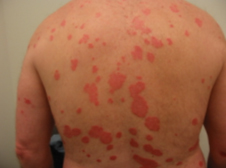
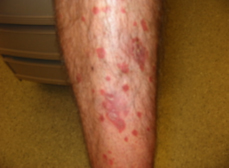
Psoriasis is a common skin disorder, affecting about 2% of the general population. It is an inflammatory disease in which individuals develop skin lesions on their body. Individuals may have only a limited amount of skin involved or the whole body may be affected. While psoriasis is not typically life threatening, it can greatly affect appearance, self-esteem, and quality of life. Psoriasis is often itchy and may cause painful drying, cracking or blistering. Up to 40% of individuals with moderate to severe psoriasis develop arthritis symptoms, or have psoriatic arthritis. Joint symptoms may develop before, at the same time, or after the onset of psoriasis. A number of treatment options are available for psoriasis. For limited disease, topical medications are the therapy of choice and include topical steroids, vitamin D3 (Dovanex), tazarotene, and anthraline. Topical immunomodulators (tacrolimus, pimecrolimus) work well for lesions on the face, armpits and groin (inverse psoriasis).
For more extensivedisease, phototherapy, systemic agents, and biologic agents are available. Phototherapy include broad band ultraviolet B (UVB), narrow band UVB, and psoralen and UVA (PUVA). Based on efficacy and minimal long-term effects, we primarily use narrow band UVB in our practice. Patients typically need treatment 2-3 times per week and respond relatively quickly. For limited localized disease, topical paint PUVA or excimer laser can be used. itching with narrow band UVB, including dialysis patients. Systemic agents include methotrexate, cyclosporine, etretinate, and 6-thioguanine. These agents require close monitoring and are for patients with severe disease.
Recently several new agents are approved for the treatment of psoriatic arthritis and psoriasis. These agents, called biologics because they are protein medications that are injected or infused into patients, have an excellent safety profile and are highly efficacious. Etanercept (Enbrel) is approved for psoriatic arthritis and psoriasis and is a self-administered medication given weekly. Etanercept inactivates TNF-a, an important inflammatory molecule in psoriasis. Efalizumab (Raptiva) is approved for psoriasis and is self-administered weekly. Efalizumab binds CD11A, inhibiting T-cell activation and migration. Alefacept (Amevive) is approved for psoriasis and is injected weekly in the doctors office. Alefacept acts by inactivating T cells which cause the inflammation seen in psoriasis. Infliximab (Remicade) is approved for psoriatic arthritis and is given as an intravenous infusion in the doctors office. Infliximab acts by binding TNF-a. Dr. Murakawa at Somerset Skin Centre regularly utilizes all treatment options available. Some treatment options are required in the office setting. Somerset Skin Centre offers all therapeutic options, including phototherapy (narrow band UVB and PUVA), and Amevive (Efalizumab) and Remicade (Infliximab). The office staff is fully trained for infusions and intramuscular injections.
Did you know?
Dr. Murakawa is a member of more than ten professional dermatological organizations including the American Academy of Dermatology, the Association of Professors of Dermatology, Michigan Dermatological Society, American Society for Dermatologic Surgery, American Society for Mohs Surgery, the Dermatology Foundation, the Society of Investigative Dermatology, the American Medical Association, Michigan State Medical Society, and the Medical Dermatological Society.